Best Time to Visit Puerto Rico: Season, Prices and Storms
In this guide
- The calendar in one table
- Hurricane season: the dates that are actually official
- The dry season, and why “dry” is the wrong word
- What prices actually do
- Sargassum: a real factor, with a real season
- Timing the things people actually come for
- The festival calendar worth planning around
- Mistakes to avoid
- So when should you go?
The short answer: mid-December to mid-April is the reliable season and the expensive one, June through November is the Atlantic hurricane season and the cheap one, and the genuinely good value sits in the narrow bands at either end — late April into May, and late November into early December.
That is the whole decision. Everything below is the detail that makes it defensible: the official season dates, what actually changes month to month, and the three things most guides get wrong about Puerto Rico’s weather.
One point to settle first, because it changes how you plan: Puerto Rico is an unincorporated US territory. For a traveller from the mainland that means no passport requirement, no currency exchange, no roaming charges on most US mobile plans, and a valid US driving licence. What ID actually gets you through TSA, and what foreign visitors and minors need, is in Puerto Rico travel requirements: passport, REAL ID, minors and customs. It also means a domestic-flight market, so fares track US holiday demand rather than international seasons.
The calendar in one table
| Window | Weather | Storm risk | Crowds and prices | Verdict |
|---|---|---|---|---|
| Mid-Dec to mid-Apr | Least humid stretch of the year; February and March are the driest months | None — outside the official season | Peak. Highest rates, hotels filling months ahead | The safe choice if budget is not the constraint |
| Late Apr to May | Warming and wetter, but still mostly settled | Still outside the official season | Falling sharply after Easter | Best value of the year |
| Jun to mid-Aug | Hot, humid, afternoon showers | Season open, but historically quiet early | Low, with a US summer-holiday bump | Fine with flexible bookings |
| Mid-Aug to mid-Oct | Hot and wet, 5-6.5in a month | The statistical peak | Lowest of the year | Cheapest, and the real gamble |
| Late Oct to early Dec | Storm risk falls away fast, but November is San Juan’s wettest month | Tailing off; season ends 30 Nov | Low until the holidays hit | Second-best value |
Hurricane season: the dates that are actually official
This is where you want a primary source rather than a blog’s rule of thumb. The National Hurricane Center states it plainly:
- The Atlantic hurricane season runs from 1 June to 30 November, and the Atlantic basin explicitly includes the Caribbean Sea.
- The peak of the season is 10 September, with most activity occurring between mid-August and mid-October.
- Based on the 1991–2020 climate period, an average season has 14 named storms, 7 hurricanes and 3 major hurricanes.
- In an average season the first named storm forms mid to late June, the first hurricane early to mid August, and the first major hurricane late August or early September.
Read those last two points together and the shape of the risk becomes obvious. The season is six months long, but it is not six months of equal danger. The NHC’s benchmark table shows that in a typical year only one named system has formed by 20 June, three by 3 August — and then eight by 9 September. The risk is heavily loaded into a six-week window.
The NHC also notes that cyclones “sometimes occur before and after these dates,” which is the reason to treat 1 June and 30 November as administrative boundaries, not force fields.
What this means for booking. June and early July are statistically quiet and priced as though they were not. Late August through September is the stretch where a direct hit, a near miss or simply a week of rain is a live possibility — and where refundable rates and trip insurance stop being optional extras. Our Puerto Rico hurricane season guide goes further into how to read a forecast and what travel protections actually cover.
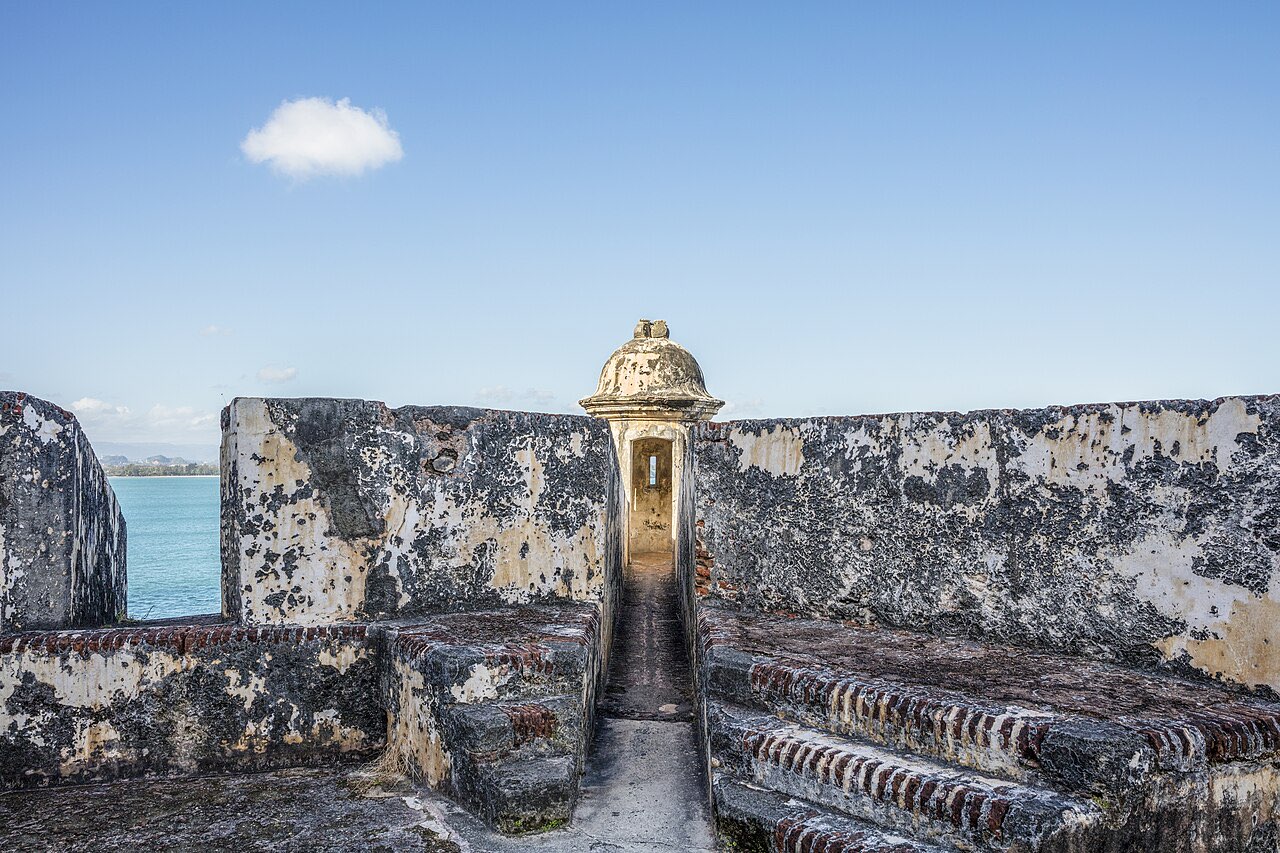
The dry season, and why “dry” is the wrong word
Puerto Rico’s own tourism board describes December through April as the period with pleasant temperatures and lower humidity, and the driest months as roughly January to April. It places the rainy season at about April through November, with the heaviest rain August to October, and characterises the showers as usually brief and mostly in the afternoons, especially in the mountains. The official station record for San Juan, printed below, agrees about the shape of the year but not about its wettest month.
Three caveats, because the phrase “dry season” oversells it:
- The driest months still get rain. Expect short afternoon showers in any month. What changes is their frequency and how quickly the sky clears afterwards.
- The island has several climates at once. The north coast, the south coast, the central mountains and the dry south-west do not share a rainfall calendar. A grey afternoon in the sierra routinely coincides with sun in Ponce.
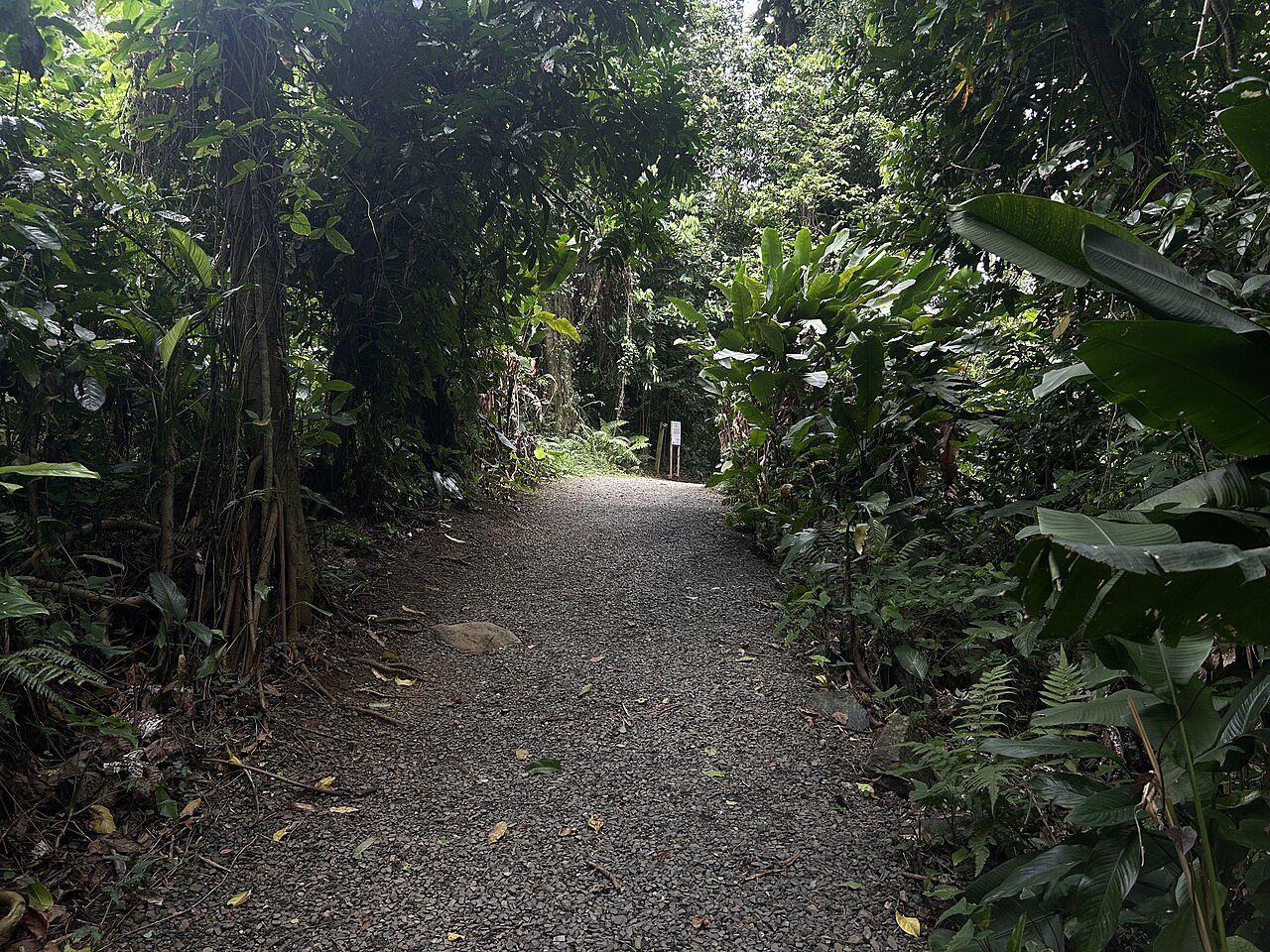
- El Yunque rains year-round. The rainforest has no dry season. If you are planning a day there, plan for rain in February exactly as you would in September — see our El Yunque guide for how to time the morning and what the current trail closures are.
Now the numbers, because they are available after all. These are the official 1991–2020 climate normals published by NOAA’s National Centers for Environmental Information for the station at Luis Muñoz Marín International Airport in San Juan (station RQW00011641) — the north coast, where most visitors land and most hotel rooms are:
| Month | Rainfall (in) | Avg high (°F) | Avg low (°F) |
|---|---|---|---|
| January | 4.07 | 83.2 | 71.9 |
| February | 2.58 | 83.8 | 71.8 |
| March | 2.18 | 84.7 | 72.4 |
| April | 4.60 | 86.2 | 74.0 |
| May | 5.54 | 87.4 | 75.7 |
| June | 4.66 | 89.0 | 77.2 |
| July | 6.02 | 88.7 | 77.6 |
| August | 6.29 | 89.1 | 77.8 |
| September | 6.50 | 89.2 | 77.5 |
| October | 5.21 | 88.6 | 76.7 |
| November | 7.37 | 86.1 | 74.9 |
| December | 4.85 | 84.2 | 73.3 |
Three things fall out of that table, and two of them cut against the seasonal summary above.
- The temperature barely moves. The gap between the coolest month’s average high and the warmest month’s is about 6°F. February afternoons average 83.8°F; September afternoons average 89.2°F. Nobody should choose a month in Puerto Rico for the temperature. Choose it for rain, storms and prices.
- November is San Juan’s wettest month — not September. At 7.37in it beats September’s 6.50in by almost an inch, and it is the only month above seven inches. That is awkward for the common advice to treat late autumn as the island’s recovering shoulder season. The storm risk really does collapse after mid-October, as the hurricane-season numbers above show. The rain does not; it peaks. Those are two different risks and they do not share a calendar.
- The genuinely dry months are February and March, at 2.18–2.58in — less than half of November. January (4.07in) and April (4.60in) sit inside the popular “dry season” window but are roughly twice as wet as March. If dry weather is the point of the trip, the window is narrower than “December to April” suggests.
One caveat we will not bury: this is a single coastal station. Puerto Rico’s south-west around Guánica is genuinely arid, and the central sierra and El Yunque are far wetter than any figure in that table. These numbers describe where you will most likely be staying, not the island as a whole.
What prices actually do
We will not invent percentages. What is documented, from the tourism board’s own pages, is the direction and the mechanism: the December-to-April window is the island’s peak travel period, which means higher hotel prices and bigger crowds, especially in San Juan, and hotels that can fill months ahead. For fewer crowds it points travellers at May, or September to November.
The practical version:
- Christmas and New Year are the single most expensive stretch. Puerto Rico’s holiday season is famously long, and San Juan is busy through it.
- January and February stay expensive, because that is when the US north-east wants to be somewhere warm.
- Easter week is a domestic peak — Puerto Rican families travel, and coastal towns fill up.
- The week after Easter is often the first real drop of the year. This is the single most under-used booking window on the island.
- September and October are the cheapest, for the reasons set out above.
- Late November into the first week of December is the other quiet pocket: the hurricane season has effectively closed and the holiday surge has not started.
If you are costing a trip rather than just timing it, our Puerto Rico budget and costs guide breaks down where the money actually goes.
Sargassum: a real factor, with a real season
Sargassum is the brown seaweed that washes up in mats and, when it rots, smells of sulphur. It is not a scare story, and it is not every beach every year.
The monitoring that matters comes from the University of South Florida’s Optical Oceanography Lab, published monthly and carried for Puerto Rico and the US Virgin Islands by CARICOOS, the NOAA-affiliated regional ocean observing system. From the 2026 bulletins: amounts started to decrease in July, and were expected to continue decreasing in the coming months until possibly November, with beaching around the Caribbean continuing but “likely not as severe as in June–July.” USF expects 2026 to rank as the second-largest sargassum year on record, behind 2025.
So the seasonal shape is consistent: low in late autumn and winter, building through spring, heaviest around June and July, easing through the autumn.
Two honest limitations. First, USF’s outlooks are basin-wide — they do not forecast individual Puerto Rican beaches. Second, the widely repeated claim that the north coast around San Juan escapes sargassum while the east and south-east catch it is not something we found in any official source, so treat it as a hypothesis rather than a plan. If a clean beach is the point of your trip, check a current local beach report in the days before you fly, and keep an inland or old-city day in reserve. Our Puerto Rico beaches guide covers the coasts in more detail.
Timing the things people actually come for
Surfing. The west-coast swell season is the northern-hemisphere winter, broadly November to March, which is the opposite of the calm, flat water that snorkellers want. If Rincón is on your list, you are planning a winter trip; see the Rincón surf guide.
Bioluminescent bays. These work year-round, but the display is at its best on dark nights — plan around the new moon, not the season. Rain and wind matter more than the month. Details in our bioluminescent bay guide.
Island-hopping to Vieques and Culebra. Sea state governs this more than rainfall. Winter northers and the back end of hurricane season both produce days when the crossing is uncomfortable or cancelled.
Hiking and the mountains. Morning, every month. Cloud builds over the interior through the day in all seasons.

The festival calendar worth planning around
Puerto Rico’s calendar has one event big enough to change your booking strategy.
Fiestas de la Calle San Sebastián — “SanSe”. Four days in Old San Juan that function as the unofficial close of the island’s holiday season. Discover Puerto Rico describes it as usually falling on the third weekend of January, Thursday to Sunday. For 2027, the San Juan mayor’s office announced 21–24 January. Old San Juan is effectively full for it, and rooms go early — so this is a date to decide about rather than stumble into. Confirm the dates with the municipality closer to the time; they move with the calendar.
Beyond SanSe, two general points. The Christmas season is unusually long here, running from late November through to SanSe itself, which is why January is not the quiet month a mainland traveller might expect. And Easter week is a genuine domestic travel peak, with beaches and coastal towns at their busiest.
Smaller town patron-saint festivals run all year. They are worth catching if your dates happen to coincide, but they are not a reason to move a trip.
Mistakes to avoid
- Treating the whole hurricane season as equally risky. Early June and late November are not mid-September. The NHC’s own climatology says so.
- Booking non-refundable rates in late August or September. The savings are real; so is the exposure.
- Assuming the dry season means no rain. It does not, anywhere on the island, and it never does in El Yunque.
- Planning a January trip around SanSe without realising it. If you want Old San Juan quiet, avoid that weekend; if you want the festival, book months ahead.
- Expecting a single island-wide forecast to be useful. The north coast, the mountains and the dry south-west behave differently on the same day.
- Believing a sargassum map from last season. It changes year to year and month to month.
So when should you go?
- You want certainty and will pay for it: February or March.
- You want the best ratio of weather to price: the two or three weeks after Easter, or late November into early December.
- You are travelling on the lowest possible budget and can be flexible: September or October, with refundable bookings.
- You are coming to surf: December to February on the west coast.
- You are coming for a festival: SanSe, late January, booked early.
Season dates and official guidance in this guide were checked in October 2026 against the National Hurricane Center and Puerto Rico’s own tourism pages, and they change. Before you book, confirm current conditions and any advisories, and read our Puerto Rico safety guide for how to handle surf, rip currents and storm warnings once you are there. If you already know your dates, the San Juan guide is the next thing to read.
Frequently asked questions
What is the best month to visit Puerto Rico?
If you want the single safest bet on weather and the lowest storm risk, pick a month between January and April. Puerto Rico's tourism board describes December through April as the period with pleasant temperatures and lower humidity, and the driest months as roughly January to April. That window is also outside the Atlantic hurricane season entirely, which the National Hurricane Center dates as 1 June to 30 November. The cost of that certainty is that it is also the island's peak travel season, with the highest room rates and the busiest beaches.
When is hurricane season in Puerto Rico?
The Atlantic hurricane season officially runs from 1 June to 30 November, and the Caribbean Sea is inside the Atlantic basin. The National Hurricane Center puts the climatological peak at 10 September, with most activity between mid-August and mid-October. The NHC also notes that storms sometimes form before and after the official dates, so the calendar is a guide rather than a guarantee.
Is September really that bad in Puerto Rico?
September carries the highest storm risk of any month. The NHC's climatology puts the season's peak on 10 September, and in an average season the eighth named storm has formed by 9 September. It is also inside the period the tourism board describes as the heaviest rain, August to October. Prices are at their lowest for exactly that reason. If you travel then, treat refundable bookings and trip insurance as part of the cost rather than an upsell.
Does it rain in Puerto Rico in the dry season?
Yes, and that is normal. Puerto Rico does not have a dry season in the sense of weeks without rain. Even in the driest months you should expect short afternoon showers, especially in the mountains. El Yunque is the clearest case: rain falls in the rainforest in every month of the year, which is precisely why it is a rainforest.
When is sargassum worst in Puerto Rico?
The University of South Florida's monitoring, carried for the region by CARICOOS, shows Caribbean sargassum building through spring, peaking around June and July, and then declining through the autumn until roughly November. There is no official beach-by-beach forecast for Puerto Rico, so the only reliable check is a current beach report close to your travel dates.
Do I need a passport to visit Puerto Rico?
Not if you are travelling from the United States. Puerto Rico is an unincorporated US territory, so a flight from the mainland is a domestic flight: you need acceptable identification for TSA, which since 7 May 2025 means a REAL ID-compliant licence or another accepted document such as a US passport. The currency is the US dollar, most US mobile plans work without roaming charges, and a US driving licence is valid.
Book an activity
Booked through GetYourGuide. We earn a commission if you book, at no extra cost to you — it never changes which option we recommend. How we work
Keep planning
- Puerto Rico Travel Requirements for US and Foreign Visitors
Puerto Rico travel requirements for 2026: US citizens need REAL ID, not a passport. Foreign visitors need ESTA or a visa. Rules for minors and USDA customs.
Updated Nov 2026 - Is Puerto Rico Safe? Neighbourhoods, Beaches and Hurricanes
Is Puerto Rico safe? No State Department advisory applies, official 2025 crime data, rip currents and surf, hurricane season, and the precautions that matter.
Updated Oct 2026 - Puerto Rico Bioluminescent Bays: Mosquito, Laguna Grande, Parguera
Puerto Rico bioluminescent bay guide: Mosquito Bay vs Laguna Grande vs La Parguera, which allows swimming, new-moon dates for late 2026, and how to pick a tour.
Updated Oct 2026