Puerto Rico Travel Requirements for US and Foreign Visitors
In this guide
- Requirements at a glance
- Why no passport: Puerto Rico counts as the United States
- US travellers: REAL ID is the requirement that matters
- Foreign visitors: same rules as the mainland
- Minors
- Customs versus the agricultural check
- Arriving directly from abroad
- Going home: the USDA agricultural inspection
- Practical checklist
US citizens do not need a passport for Puerto Rico. It is a US territory, so a flight from the mainland is a domestic flight. The document you need is the same ID you would show for a flight from Chicago to Denver: a REAL ID-compliant driver’s licence, a US passport or passport card, or another TSA-accepted ID. There is no passport control, no customs form and no visa on arrival.
Children under 18 do not have to show ID at the TSA checkpoint on that flight. The airline can still ask for proof of age, and a child who is not a US citizen needs their own ESTA or US visa.
Foreign visitors need exactly what they need for the mainland: an approved ESTA if they are from a Visa Waiver Program country, or a US visitor visa if they are not. Puerto Rico is not a separate entry point with looser rules.
The check that catches people is on the way home, not on the way in. Before you fly back to the mainland, USDA inspects bags for fruit, plants and other agricultural items. That is an agriculture inspection, not customs, and some of the most tempting things in a Puerto Rican market are not allowed to leave.
This guide is based on federal law and on TSA, CBP, DHS, USAGov and USDA pages read in November 2026. Rules and fees change, so check the official pages linked below before you fly.
Requirements at a glance
| Traveller | Document to fly in | Visa or ESTA | Arrival formalities |
|---|---|---|---|
| US citizen from the mainland | REAL ID licence, US passport or passport card, or other TSA-accepted ID | None | None; domestic arrival |
| US green card holder from the mainland | Permanent resident card (TSA-accepted) | None | None; domestic arrival |
| US citizen child under 18, domestic flight | No ID required by TSA (check the airline) | None | None |
| Visa Waiver Program citizen (e.g. UK, EU, Australia) | E-passport | ESTA | CBP inspection at first US port of entry |
| Other foreign nationals | Passport | US visitor visa | CBP inspection at first US port of entry |
| Anyone arriving from a foreign country | Passport | As above | CBP immigration and customs at San Juan |
Why no passport: Puerto Rico counts as the United States
This is not a courtesy or a loophole. The Immigration and Nationality Act defines the “United States”, in a geographical sense, as the continental US, Alaska, Hawaii, Puerto Rico, Guam, the US Virgin Islands and the Northern Mariana Islands (8 U.S.C. § 1101(a)(38)). Moving between the mainland and San Juan is legally the same as moving between two states.
The practical consequences follow from that:
- No passport stamp, no customs form and no immigration line on arrival from the mainland.
- No State Department travel advisory. Advisories cover foreign countries only; Puerto Rico does not appear in the official list. Our Puerto Rico safety guide covers what to know instead.
- The US dollar is the currency, US mobile plans generally work as at home, and your state driver’s licence is valid for driving. See our Puerto Rico driving guide before you rent.

US travellers: REAL ID is the requirement that matters
Because the flight is domestic, the rule you have to satisfy is TSA’s, not Puerto Rico’s. TSA began enforcing REAL ID on 7 May 2025. A state licence that is not REAL ID-compliant is no longer accepted. To board, you need one of:
- a REAL ID-compliant driver’s licence or state ID, marked with a star (or flag) or the word “Enhanced”;
- a US passport or US passport card;
- another TSA-accepted document, such as a permanent resident card or a foreign government-issued passport.
A temporary paper licence is not an acceptable ID. TSA does accept some mobile driver’s licences, but only from states it has approved for federal use, and only when that mobile ID is based on a REAL ID, an enhanced licence or an enhanced ID card. TSA’s own FAQ says that if you use a digital ID you should still carry the physical card. The full list is on TSA’s identification page.
Two details from that page are worth knowing. TSA currently accepts these IDs up to two years after they expire. And TSA does not require children under 18 to show ID on domestic flights; the exceptions are in the minors section below.
If you turn up without acceptable ID
Since 1 February 2026, TSA has offered a paid fallback called ConfirmID. Adults 18 and over without an acceptable ID pay a $45 fee through Pay.gov; the payment is valid for 10 days from the travel date on the receipt, and each adult pays separately. You show the receipt at the checkpoint and TSA attempts to verify who you are, but TSA says plainly that there is no guarantee it can. Children under 18 do not need it. Treat it as an emergency option, not a plan. Details are on TSA’s ConfirmID page.
This matters twice: on the way out and on the way home from San Juan. Losing your only ID on the island is the most common way a US traveller gets stuck, which is why a passport card or passport packed separately from your wallet is cheap insurance. Our Puerto Rico packing list has the rest.
Foreign visitors: same rules as the mainland
If you are not a US citizen or resident, Puerto Rico is simply a US port of entry. You clear CBP immigration at the first US airport you land in, whether that is San Juan, Miami or New York, and from then on mainland-to-Puerto Rico flights are domestic.
Visa Waiver Program (VWP) travellers. Citizens of the 42 VWP countries, including the UK, most of the EU, Australia, New Zealand and Japan, can visit for up to 90 days without a visa, according to CBP’s VWP page. You need:
- an approved ESTA, which DHS says is generally valid for two years or until your passport expires, whichever comes first;
- an e-passport (with the chip symbol);
- a return or onward ticket, arriving on a carrier that participates in the programme.
Every traveller needs their own ESTA, including infants and children. CBP says a parent or agent can submit the application, but a parent’s approval does not cover the child.
CBP says ESTA applications can be submitted any time before travel and recommends applying as soon as you start planning. USAGov listed the total cost as $40.27 on a page last updated 10 April 2026. Confirm the current amount on the official ESTA site before you pay, and use only that site, not the look-alike agencies that charge extra. An approved ESTA does not guarantee entry: the CBP officer on arrival still decides.
Everyone else needs a US B-2 visitor visa (or another valid US visa) issued by a US embassy or consulate, and a child needs their own visa too. Canadian citizens are generally visa-exempt for US visits and do not use ESTA, but should confirm current rules with CBP. On a domestic flight from the mainland, TSA accepts a Canadian provincial driver’s licence. A passport is what a Canadian needs if San Juan is the first landing from abroad.
The 90 days are shared. Puerto Rico is not a separate stay. Days in San Juan count toward the same VWP or visa period as days in Florida, and a quick hop to a nearby island does not necessarily reset the clock.
Minors
US citizen children flying from the mainland. TSA does not require children under 18 to show identification on a domestic flight, and a flight between the mainland and San Juan counts. Two caveats:
- The airline can still ask. Carriers set their own rules for a lap infant and for an unaccompanied minor, and they often want proof of age. Check with the airline before you fly. TSA does not publish a list of what each carrier accepts.
- TSA PreCheck is the exception on TSA’s side. An unaccompanied minor who is eligible for PreCheck must show an acceptable ID to receive that expedited screening. Without PreCheck, TSA still does not require ID under 18. ConfirmID’s $45 fee is for adults only.
Children who are not US citizens. CBP requires every Visa Waiver Program traveller to have their own approved ESTA, including infants and children travelling with a parent. A child from a country outside the programme needs their own US visa. On the domestic hop from Miami or New York to San Juan, after they have already entered the United States, the TSA rule above is the one that applies at the checkpoint.
A trip that leaves US territory. Vieques and Culebra are still Puerto Rico, so a US citizen child needs no passport for those ferries. A day trip or cruise to the Dominican Republic, or to any other foreign port, is international travel. A US citizen child needs a passport to come back into Puerto Rico or the mainland, the same as an adult.
Customs versus the agricultural check
These are different inspections, and most visitors from the mainland only meet one of them.
| Journey | What you clear |
|---|---|
| US mainland, Hawaii or another state to Puerto Rico | Nothing. Domestic arrival: no passport control and no CBP customs form. |
| A foreign country into San Juan | CBP immigration and customs at the first US airport, which may be San Juan. US citizens need a passport for this. |
| Puerto Rico back to the mainland | No CBP customs. A USDA agricultural inspection at the airport before security. |
Arriving directly from abroad
If you fly or sail into San Juan from a foreign country (the Dominican Republic, Europe, a Caribbean cruise port), San Juan is your US port of entry. Everyone, including US citizens, goes through CBP immigration and customs there, and US citizens need a passport to return from those places. Our Dominican Republic entry requirements guide covers the other direction if you are combining the two.
Islands within Puerto Rico, such as Vieques and Culebra, are domestic in every sense; see our Vieques and Culebra guide.
Going home: the USDA agricultural inspection
This is the step that catches people out. It is not a customs hall: the flight home is still domestic for immigration. It happens before the TSA line, and it has nothing to do with your ID. Puerto Rico has plant pests that the mainland does not, so the USDA’s Animal and Plant Health Inspection Service (APHIS) controls what leaves the island. Its instruction is direct: you must present all food, plants and other agricultural items to the USDA inspector at the airport before you leave. That applies to anything in a checked bag as well as your carry-on, so declare it rather than hoping it goes unnoticed.
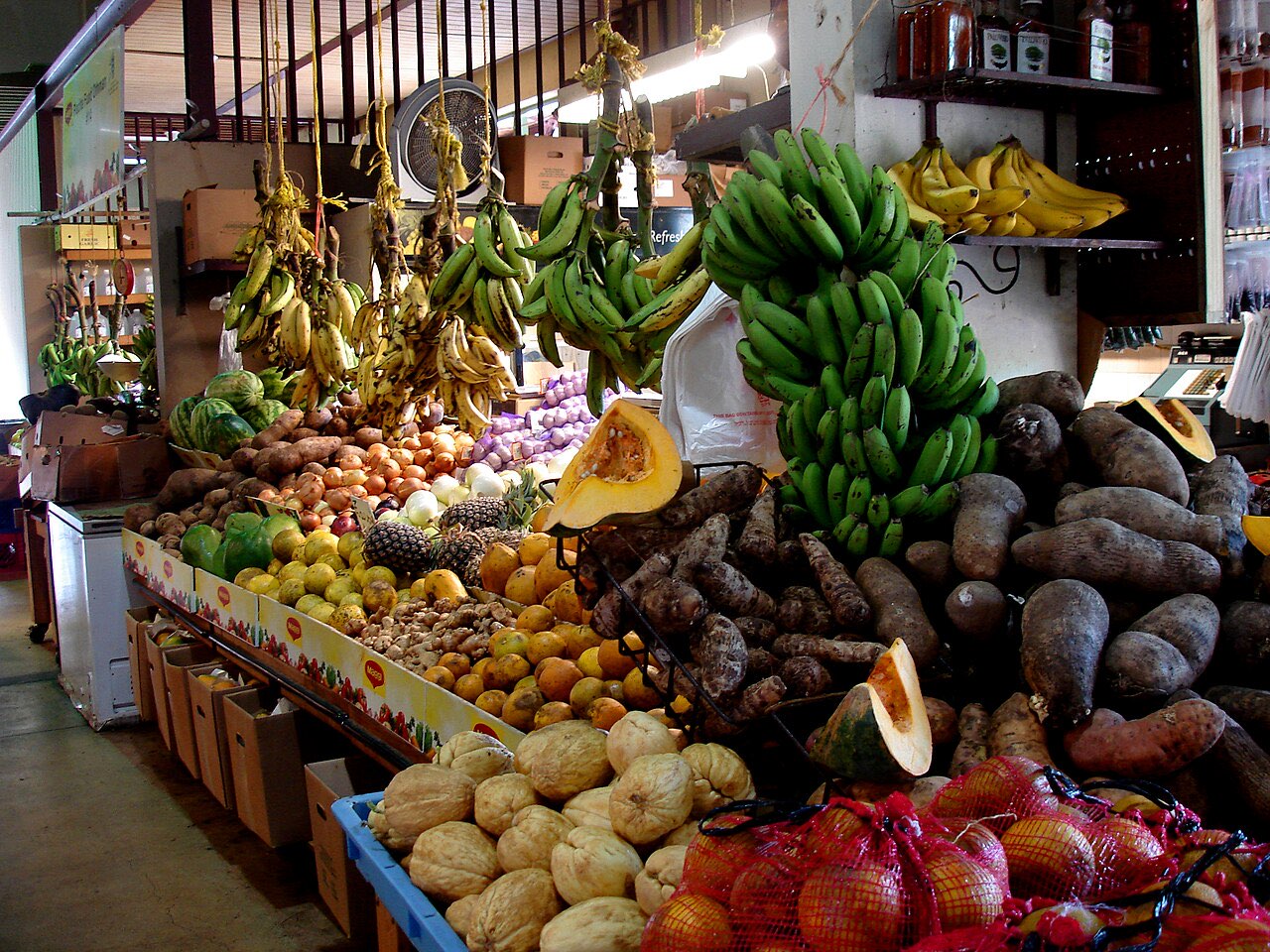
The rule for fresh produce is “everything is prohibited except what is on the list”. APHIS’s current list was last modified on 16 September 2026. The table is what travellers most often try to pack; the official list is longer and also allows tomatoes, peppers, strawberries and watermelon. If your item is not named here, check that page before you buy it:
| Usually allowed (after inspection) | Not allowed |
|---|---|
| Bananas and plantains | Any fresh fruit not on the allowed list, which includes mango, passion fruit (parcha) and soursop |
| Pineapple, papaya, avocado | Sweet potato and fresh pigeon peas (gandules) |
| Citrus fruit: orange, grapefruit, lemon, lime | Plants in soil, cactus, citrus leaves, sugarcane |
| Coconut, breadfruit, cassava, yautia, taro, yam | Handicrafts made from palm fronds |
| Coffee, roasted or green | Pulpy seeds and nuts, soil, land snails, live insects |
| Cut flowers; plants without soil | Fresh guava fruit (only the leaf is listed as allowed) |
| Commercially canned and thoroughly cooked foods |
A few practical notes:
- Coffee and rum are easy. Roasted coffee is on the allowed list, and alcohol is not an agricultural product (airline liquid rules still apply in carry-on).
- Souvenirs can be a problem. Woven palm-frond hats and crafts are on the prohibited list, so ask before you buy if you plan to fly home with one.
- Meat and animal products follow separate USDA veterinary rules; APHIS points travellers to its Veterinary Services permitting tool.
- Questions? The USDA office in San Juan is on 787-919-0585.
Practical checklist
US citizens:
- REAL ID-compliant licence, or a passport or passport card (packed separately as a backup). A temporary paper licence will not get you through TSA.
- No passport needed unless you also visit a foreign country.
- Children under 18: no TSA ID on the domestic flight, but check the airline, and pack a passport for any child if the trip leaves US territory.
- Leave time at San Juan airport for the USDA check before security on the way home.
Foreign visitors:
- Approved ESTA (or US visa) for every traveller, including children, and an e-passport before you book.
- Return or onward ticket.
- Track your total days in the US, including Puerto Rico.
Everyone:
- Eat the mangoes on the island.
- Check the best time to visit and our San Juan guide for planning the trip itself.
Frequently asked questions
Do US citizens need a passport to go to Puerto Rico?
No. Puerto Rico is a US territory, and federal immigration law defines the 'United States' to include it. A flight from the mainland to San Juan is a domestic flight, with no passport control or customs on arrival. You only need the same ID you would use for any domestic flight: a REAL ID-compliant licence or another TSA-accepted ID such as a passport or passport card.
Is a REAL ID required to fly to Puerto Rico?
Yes, or another acceptable ID. TSA began enforcing REAL ID on 7 May 2025, and that applies to flights between the mainland and Puerto Rico like any other domestic route. A compliant licence has a star or flag, or says 'Enhanced'. If you have no acceptable ID, TSA's ConfirmID option costs $45 per adult, paid on Pay.gov, and TSA states there is no guarantee it can verify your identity.
Do foreign tourists need a visa or ESTA for Puerto Rico?
Yes, exactly as for the mainland. Puerto Rico is inside the US immigration system, so citizens of the 42 Visa Waiver Program countries need an approved ESTA and an e-passport, and everyone else needs a US visitor visa. Each traveller needs their own ESTA, including infants and children. VWP stays are limited to 90 days, and time in Puerto Rico counts toward the same US stay as time on the mainland. USAGov listed the total ESTA cost as $40.27 on a page last updated 10 April 2026; confirm the current amount on the official ESTA site before you pay.
Can I bring fruit from Puerto Rico back to the mainland?
Some, not all, and it must be inspected. USDA requires you to present all food and plants to its inspectors at the airport before you leave. Bananas, plantains, pineapple, avocado, papaya, coconut, citrus and coffee are on the allowed list. Mangoes, passion fruit and other fresh fruit not on the list are prohibited, as are sweet potatoes, pigeon peas, plants in soil and palm-frond handicrafts. This is a USDA agricultural inspection on the way home, not a customs form on arrival.
Do children need ID to fly to Puerto Rico?
Not for TSA, if the child is travelling within the United States. TSA does not require children under 18 to show identification on a domestic flight, and mainland to Puerto Rico counts. Airlines can still ask for proof of age, especially for lap infants and unaccompanied minors. An unaccompanied minor who wants TSA PreCheck screening must show an acceptable ID. A child who is not a US citizen needs their own ESTA or US visa. If the trip includes a foreign country, a US citizen child needs a passport to come back.
Do I go through customs flying to Puerto Rico from the United States?
No. A flight from the mainland, Hawaii or another state is domestic: no immigration line and no customs form on arrival. You do clear US Customs and Border Protection if you fly or sail into San Juan from another country. On the way home to the mainland there is still a USDA agricultural inspection, which is not customs: you must show food and plants to an inspector at the airport before you leave.
Do I need a passport for a day trip from Puerto Rico?
It depends on where. Vieques and Culebra are part of Puerto Rico, so no. The US Virgin Islands are another US territory. Any foreign country, including the Dominican Republic or a cruise stop elsewhere in the Caribbean, means international travel, and a US citizen needs a passport to fly back into Puerto Rico or the mainland.
Keep planning
- Best Time to Visit Puerto Rico: Season, Prices and Storms
The best time to visit Puerto Rico, with the official hurricane-season dates and peak, the dry months, which shoulder weeks are genuinely good value, and SanSe.
Updated Oct 2026 - Is Puerto Rico Safe? Neighbourhoods, Beaches and Hurricanes
Is Puerto Rico safe? No State Department advisory applies, official 2025 crime data, rip currents and surf, hurricane season, and the precautions that matter.
Updated Oct 2026 - Puerto Rico Bioluminescent Bays: Mosquito, Laguna Grande, Parguera
Puerto Rico bioluminescent bay guide: Mosquito Bay vs Laguna Grande vs La Parguera, which allows swimming, new-moon dates for late 2026, and how to pick a tour.
Updated Oct 2026