San Juan Guide: Old San Juan, Condado and Santurce
In this guide
San Juan is really three decisions, not one. Old San Juan is the walled colonial city with the forts. Condado is the beachfront hotel strip ten minutes east. Santurce is where the city eats and goes out. Most visitors sleep in the first or second and spend at least one evening in the third.
The practical fact worth knowing before anything else: one $10 ticket covers both forts for 24 hours. The National Park Service states it directly on its fees page — $10.00 per person, “valid for 24 hours, valid for both fortifications”, with under-16s free. A surprising number of itineraries budget two separate admissions, or visit only El Morro because they think San Cristóbal costs extra.
And the structural point: Puerto Rico is an unincorporated US territory. From the mainland that means no passport, US dollars, a valid US driving licence, and most US mobile plans working without roaming.
The three districts, compared
| District | What it is | Suits | Trade-off |
|---|---|---|---|
| Old San Juan | The walled 16th-century city: forts, plazas, painted facades, a tight grid on a hill | History first, walkers, short stays, anyone who wants to step out into the sights | Cobbles and gradients; busy on cruise days; the beach is not here |
| Condado | A beachfront strip of hotels, condos and restaurants on a narrow peninsula east of the old city | Beach plus walkable dinner; families; longer stays; people who want a pool and a lobby | Looks like upscale beachfront anywhere; little historic texture |
| Ocean Park / Isla Verde | Further east again — quieter residential beach, then the airport-side hotel strip | Beach days with less bustle; late arrivals and early departures (Isla Verde) | Further from the old city; thinner on walkable dining in parts |
| Santurce | Large inland district between Condado and the centre: galleries, murals, markets, the food and nightlife scene | Eating and going out; people who want the city locals use | Mixed street by street; a district to visit, not usually to base in |
| Miramar | Small, residential, between Santurce and the bay | Quieter base still close to everything | Few sights of its own |
If you cannot decide: Old San Juan for a trip of three nights or fewer, because the proximity is worth more than the beach on a short stay, and Condado for a week, because you will want the sea.
Old San Juan
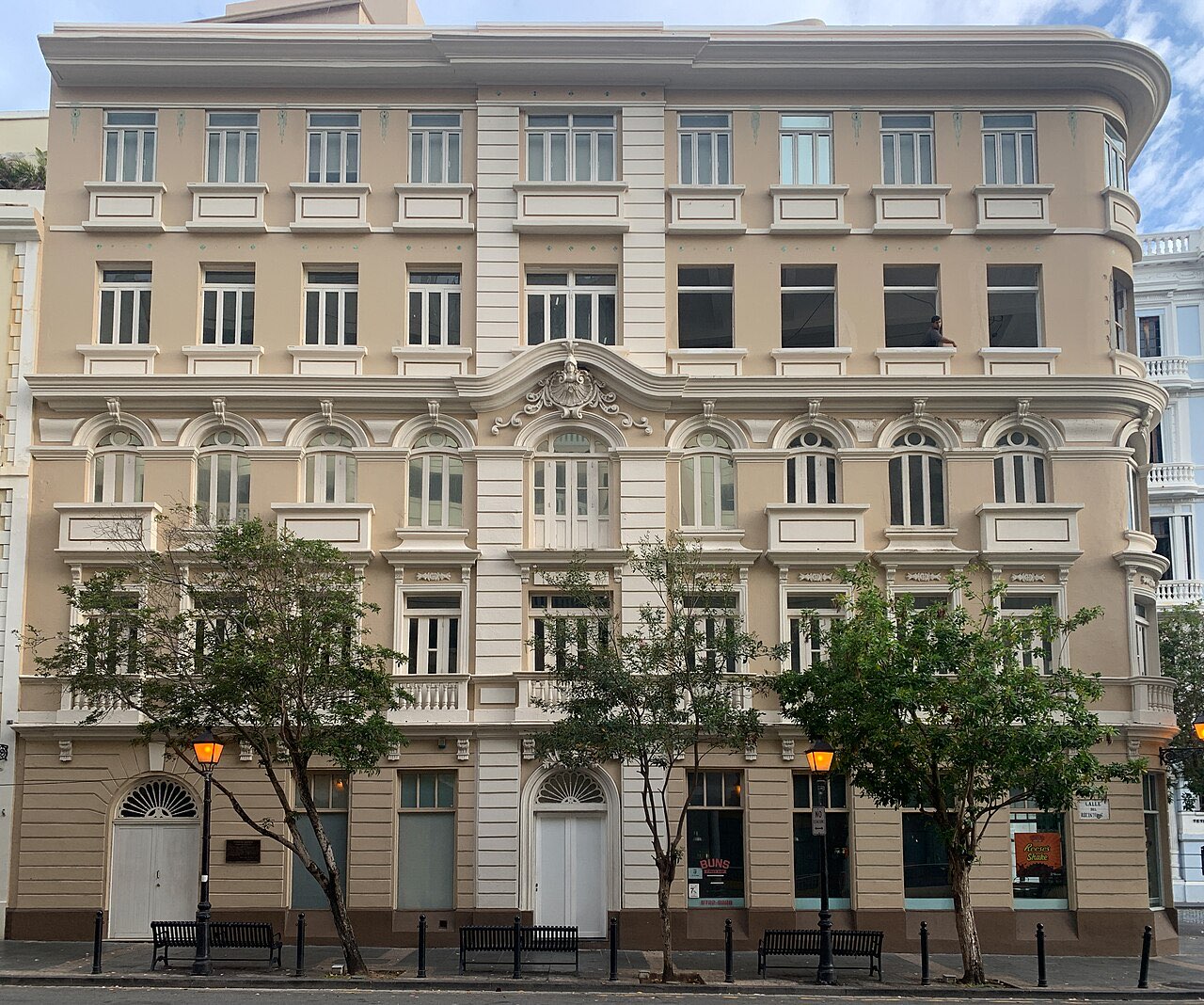
The old city is small — roughly seven blocks by seven — and walled on three sides. It is a UNESCO-listed colonial core that people actually live in, not an open-air museum, and it holds the island’s two great fortifications.
The surface matters. The streets are paved with blue-grey adoquines, the ballast stones brought over as ships’ weight. They are beautiful, uneven, and genuinely slick in rain. The grid also runs across a slope, so there are short, steep blocks. Wear flat shoes with grip. This is the single most common practical complaint about Old San Juan and it is entirely avoidable.
Cruise days change the character. The piers are a few minutes’ walk from the main shopping streets, and on heavy ship days the central blocks are busy from mid-morning to late afternoon. Early mornings and evenings are the quiet windows, and they are also when the light on the painted facades is best.
The forts: what you pay and what you get
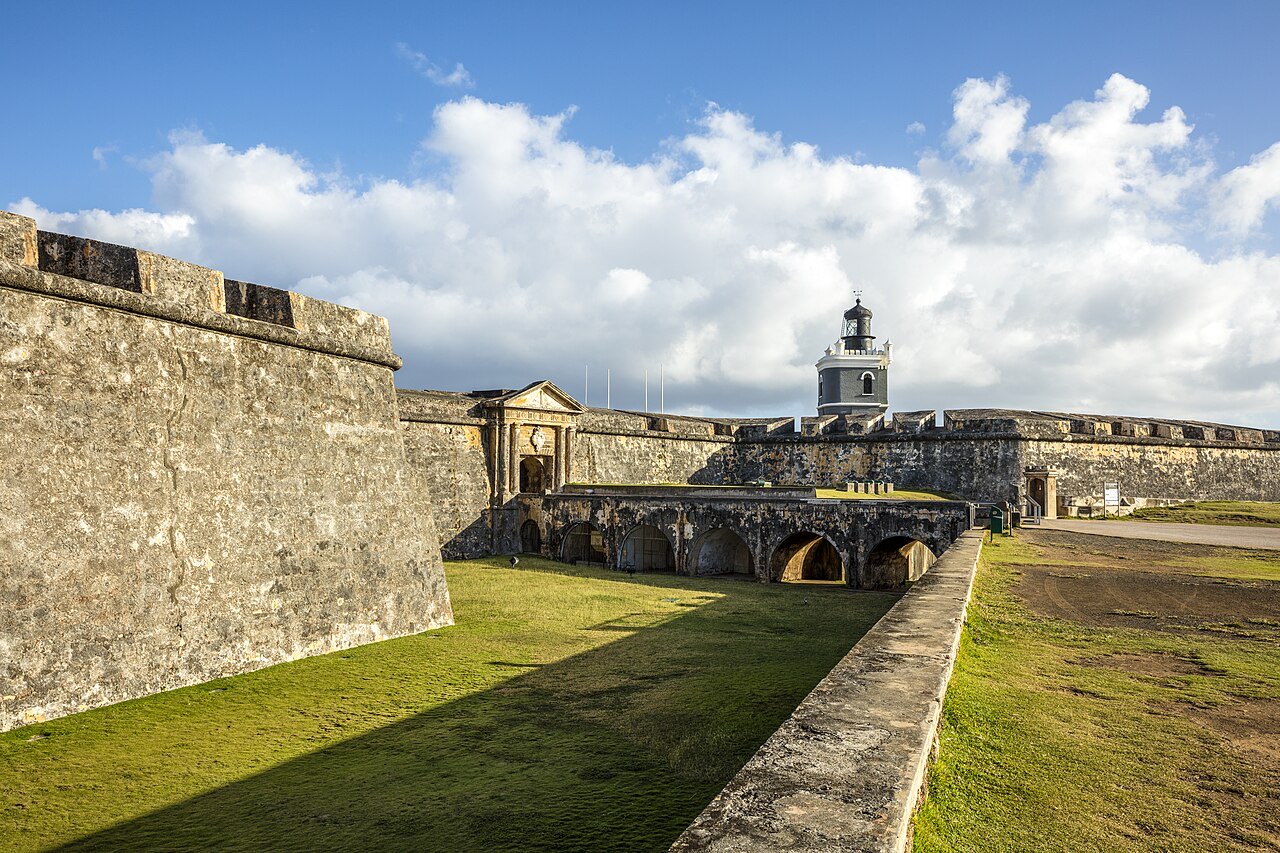
San Juan National Historic Site is a single National Park Service unit. Per the NPS, it “includes Castillo San Felipe del Morro, Castillo San Cristóbal, most of the city walls”, plus the San Juan Gate and Fort San Juan de la Cruz across the bay entrance.
| Item | As of October 2026 |
|---|---|
| Entrance fee | $10.00 per person |
| Who needs a pass | All visitors over the age of 16 |
| Children 15 and under | Free |
| Validity | 24 hours, both fortifications on one receipt |
| Hours | 9:00 a.m. – 5:00 p.m., every day |
| Closed | Thanksgiving, Christmas Day, New Year’s Day |
Source: the NPS fees and hours pages, read October 2026.
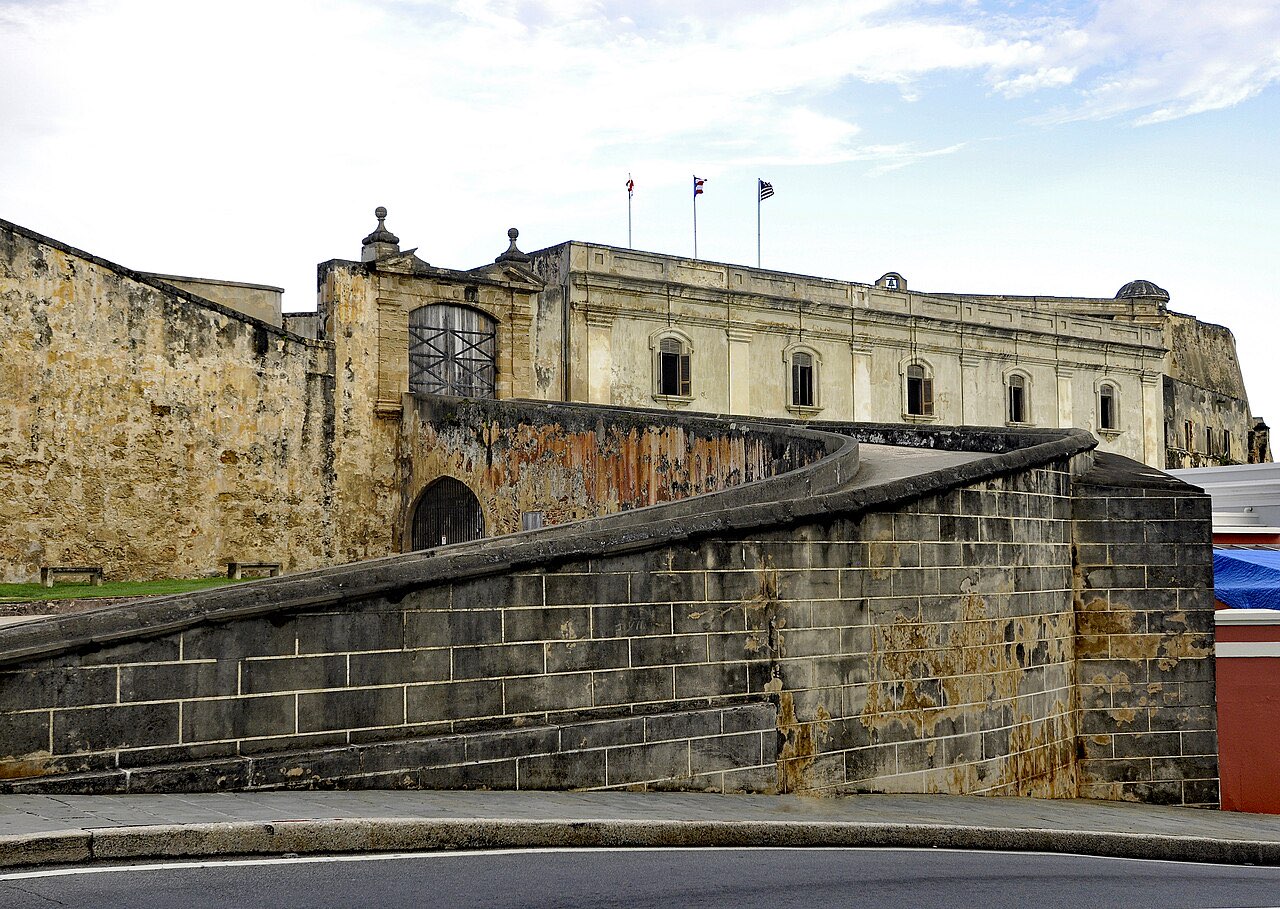
Castillo San Felipe del Morro sits on the headland at the city’s north-western tip, guarding the harbour mouth, with six levels of batteries stepping down to the water and a wide green glacis in front of it that the city uses as a kite field. It is the photograph everyone takes.
Castillo San Cristóbal, at the eastern end, is the larger of the two and the one most visitors skip. It was built to defend the city from a land attack rather than a sea one, and it is a more complex structure — outworks, tunnels, a sentry box with its own folklore. Because the ticket is shared, skipping it saves nothing.
How to sequence them. The 24-hour validity is the thing to exploit. Pay at San Cristóbal in the late afternoon, walk the eastern walls, then do El Morro the next morning before the cruise crowd and the midday heat. One payment, two good light windows, no rush.
Check the park’s alerts before you go: individual ramps, tunnels and the lighthouse open and close for maintenance, and guided-tour schedules vary. Our Old San Juan forts guide goes deeper into the structures themselves.
Condado
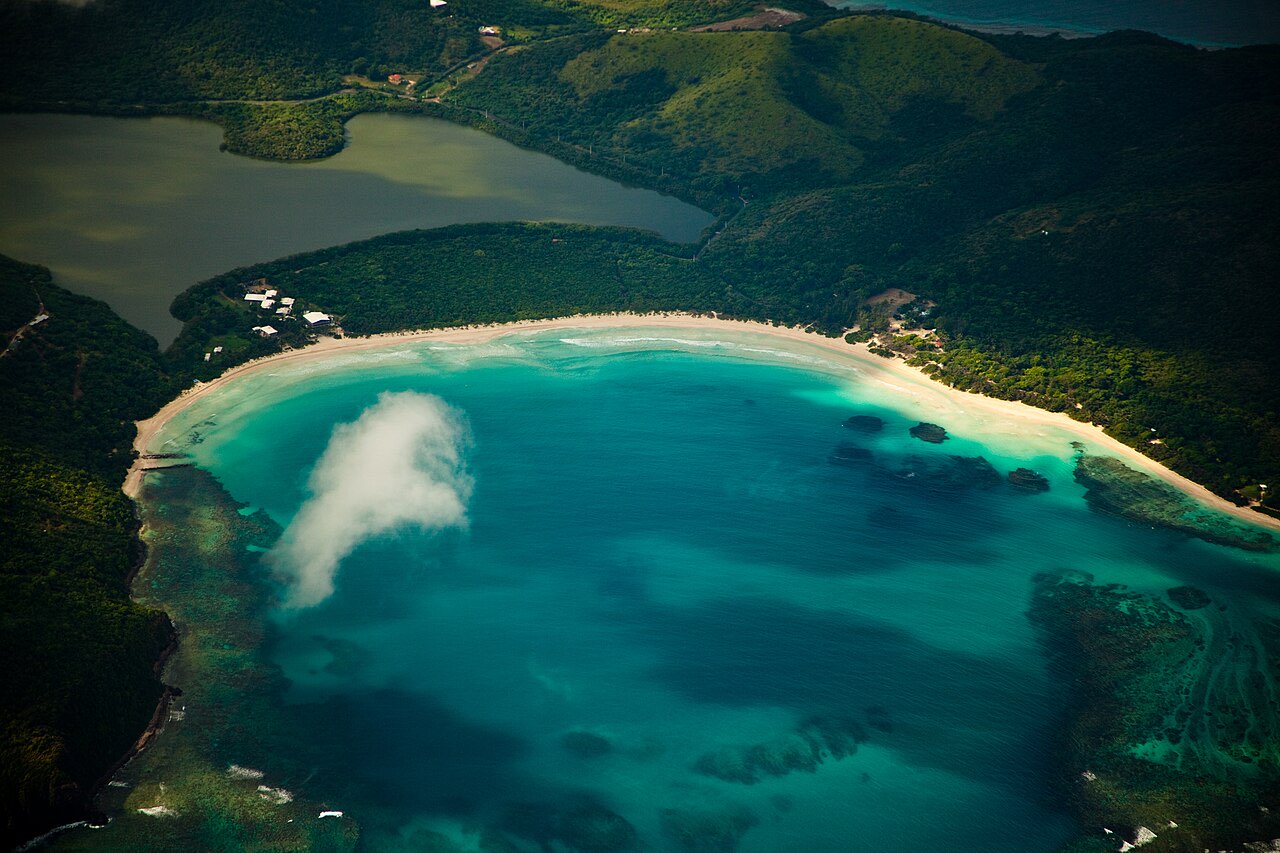
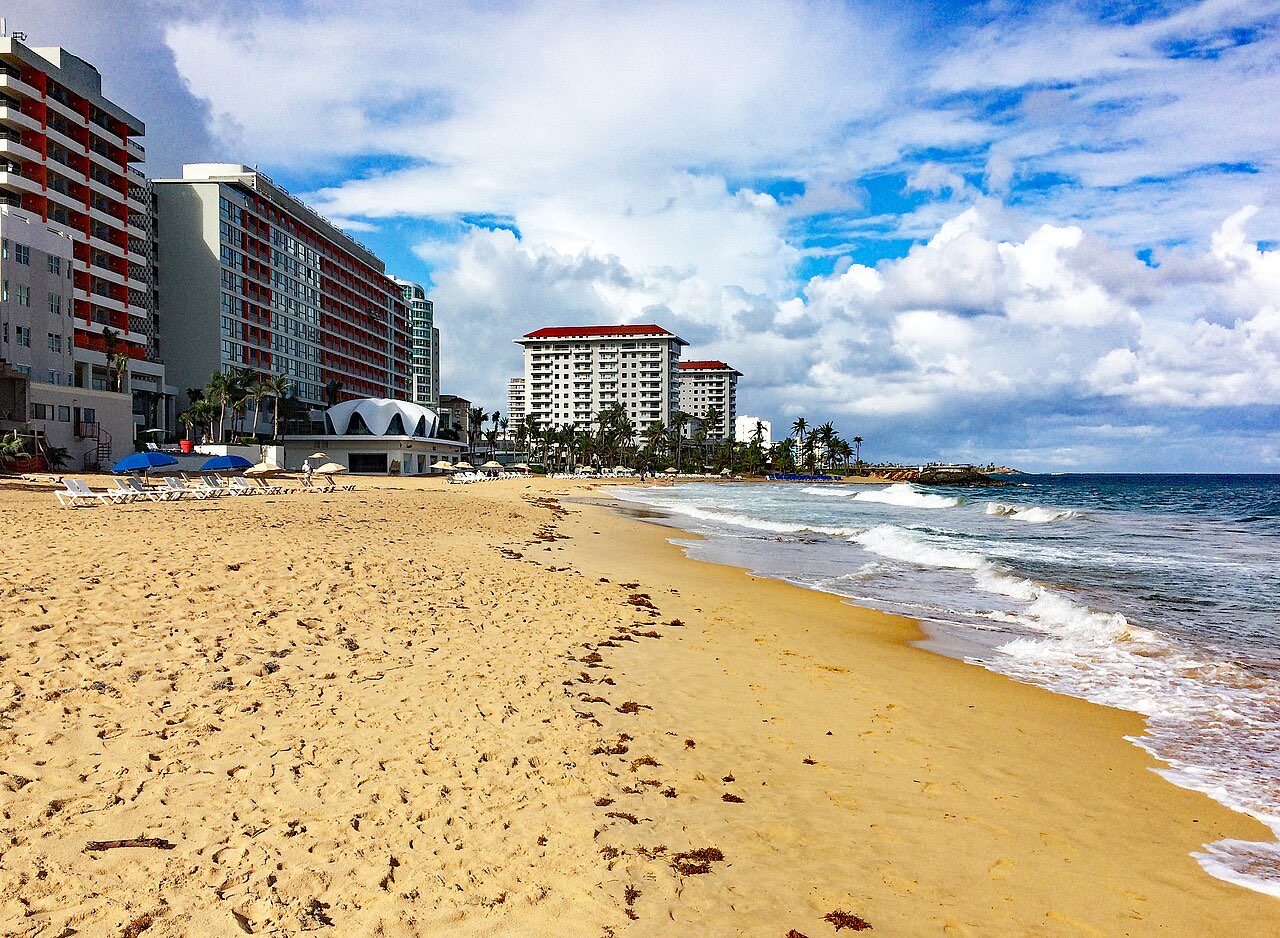
Condado occupies a narrow strip between the Atlantic and a lagoon, east of the old city. It is the closest thing San Juan has to a conventional resort district: hotel towers, condominium blocks, a beach you can swim from, and a main avenue with restaurants and shops along it.
What it does well is combine a beach day with a walkable dinner, which Old San Juan cannot. What it does not do is history — this is a 20th-century development and it reads like one.
Two practical notes. The beach is Atlantic-facing and open, so surf and rip currents are a real consideration rather than a formality; pay attention to posted flags and advisories, which the National Weather Service in San Juan updates daily. And the strip is long: “staying in Condado” can mean a five-minute walk to the restaurants or a twenty-minute one, so check the map before you book.
Ocean Park, immediately east, is the quieter residential alternative with a broad beach and guesthouses rather than towers. Isla Verde, further east still and technically in Carolina, is the airport-side hotel strip — the right choice if you land late or leave early, the wrong one if you want to walk to the old city.
Santurce, and where the food scene actually is
Here is the thing most first-time itineraries get wrong. The restaurants that San Juan is currently known for are mostly not in Old San Juan. They are in Santurce — the large district inland and west of Condado — concentrated around Calle Loíza and the Placita de Santurce, the market square that turns into a nightlife hub after dark.
Old San Juan has excellent places and some long-standing institutions, but the central blocks also carry the heaviest tourist footfall on the island, and the ratio of good to indifferent reflects that. Condado skews towards hotel dining and higher-end restaurants.
We do not name restaurants in this guide, for a simple reason: San Juan’s dining scene turns over fast, and a list written today would be partly wrong within a year. What is durable is the geography. If you want the meal that people who live here would choose, you are going to Santurce, and you are going by taxi or rideshare rather than on foot from the old city.
Santurce is also where the street art is — large-scale murals across several blocks, the legacy of years of festival painting — and where several of the city’s galleries and the Museo de Arte de Puerto Rico sit. It is a district that varies street by street, which is worth knowing when you are walking between places after dark; see our Puerto Rico safety guide for the general picture, and the Puerto Rico food guide for what to actually order.
Getting in from SJU
Luis Muñoz Marín International Airport (SJU) sits east of the city, on the Isla Verde side. It is close — this is a short urban transfer, not an expedition — and the practical options are the same three everywhere:
- Taxi from the official rank. Ask the fare or confirm the zone rate before you get in. We could not verify a current published tariff from an official source, so do not assume a fixed price without confirming it.
- Rideshare. Widely used; pick-up points at the airport are signed and occasionally move.
- Hotel transfer, which is usually the most expensive and the least hassle.
You do not need a rental car for San Juan itself. The three districts are close together, parking in Old San Juan is genuinely difficult, and the cobbled grid is unpleasant to drive. Hire a car on the day you leave the city, not the day you arrive — our Puerto Rico driving guide covers rental logistics and island roads.
A sensible two-day shape
Day one. Arrive, settle, walk Old San Juan in the late afternoon when the ships have gone: the plazas, the painted streets, the city wall and the San Juan Gate. Pay the $10 at San Cristóbal and take the eastern walls at golden hour. Dinner in Santurce.
Day two. El Morro early, on the same receipt, before the heat and the crowds. The glacis in front of it is the city’s open space — expect kites. Afternoon on the beach at Condado or Ocean Park. Evening back in the old city or at the Placita.
With a third day, leave the city: El Yunque in the morning is the standard move, and a bioluminescent bay is the best night-time counterpart. Our Puerto Rico 7-day itinerary sets San Juan inside a full island loop.
Mistakes to avoid
- Buying two fort tickets. One $10 receipt covers both for 24 hours.
- Skipping San Cristóbal. It is already paid for, and it is the larger fort.
- Wearing smooth-soled shoes on the adoquines. They are slippery dry and worse wet.
- Hiring a car for the San Juan days. Parking in the old city is a problem you are paying to have.
- Eating only within the walls. The food scene’s centre of gravity is in Santurce.
- Arriving at the forts at 4:45 p.m. The gates close at 5:00 p.m. sharp.
- Treating Condado’s beach as a pool. It is open Atlantic coast; read the flags.
When to come
San Juan works year-round, but the city is at its most comfortable and most expensive between mid-December and mid-April, and cheapest in the late-summer and early-autumn stretch that carries the real hurricane risk. The one date that reliably fills every room in the old city is SanSe, the Fiestas de la Calle San Sebastián, in late January. Our best time to visit Puerto Rico guide sets out the official season dates and the shoulder weeks that are actually good value.
Fees and hours in this guide were verified against the National Park Service in October 2026 and change without notice. Confirm them on nps.gov/saju before you go.
Frequently asked questions
How much does it cost to visit El Morro and San Cristóbal?
$10.00 per person, and one receipt covers both forts. The National Park Service states that the per-person fee is $10.00 from 2 January to 31 December, that the receipt is valid for 24 hours and valid for both fortifications, and that all visitors over the age of 16 need an entrance pass. Children 15 and under are free. There is no separate ticket for each castle, which is the single most common misunderstanding.
What are the opening hours of the San Juan forts?
Every day, 9:00 a.m. to 5:00 p.m., per the National Park Service. San Juan National Historic Site is open year-round except for Thanksgiving Day, Christmas Day and New Year's Day. Because the receipt lasts 24 hours, an afternoon visit to one fort and a next-morning visit to the other both fall under one $10 payment.
Should I stay in Old San Juan or Condado?
Old San Juan if the historic city is the point of the trip and you want to walk out of your door into it; Condado if you want a hotel strip on a swimmable beach with restaurants within walking distance. Old San Juan has the atmosphere, the forts and the cruise crowds, but a narrow beach situation and cobbled streets. Condado has the beach and the modern hotels but not the history. They are about ten minutes apart by road.
What is Santurce?
A large, mixed district between Condado and the city centre that holds much of San Juan's contemporary food, art and nightlife scene, concentrated around Calle Loíza and the Placita de Santurce area. It is where people who live in San Juan tend to eat and go out, rather than a hotel zone. Most visitors stay elsewhere and come here in the evening.
Do I need a passport or a rental car in San Juan?
No passport if you are travelling from the United States — Puerto Rico is an unincorporated US territory, so it is a domestic flight, the currency is the US dollar and a US driving licence is valid. You also do not need a car to see San Juan itself: Old San Juan, Condado and Santurce are close together and well served by taxis and rideshare. A car becomes useful only when you leave the city.
Is Old San Juan walkable?
Yes, but the surface is the catch. The old city is a compact grid of about seven by seven blocks, so everything is within a short walk, and that is the best way to see it. The streets are laid with blue-grey cobbles that are uneven and slippery when wet, and the grid runs across a hill, so there are real gradients. Flat shoes with grip, not sandals or heels.
Book an activity
Booked through GetYourGuide. We earn a commission if you book, at no extra cost to you — it never changes which option we recommend. How we work
Keep planning
- Puerto Rico Travel Requirements for US and Foreign Visitors
Puerto Rico travel requirements for 2026: US citizens need REAL ID, not a passport. Foreign visitors need ESTA or a visa. Rules for minors and USDA customs.
Updated Nov 2026 - Puerto Rico Bioluminescent Bays: Mosquito, Laguna Grande, Parguera
Puerto Rico bioluminescent bay guide: Mosquito Bay vs Laguna Grande vs La Parguera, which allows swimming, new-moon dates for late 2026, and how to pick a tour.
Updated Oct 2026 - Best Time to Visit Puerto Rico: Season, Prices and Storms
The best time to visit Puerto Rico, with the official hurricane-season dates and peak, the dry months, which shoulder weeks are genuinely good value, and SanSe.
Updated Oct 2026