Puerto Rico Bioluminescent Bays: Mosquito, Laguna Grande, Parguera
In this guide
Puerto Rico has three bioluminescent bays, and which one you should visit depends mostly on where you are staying. Mosquito Bay on Vieques is the brightest and the most worth a dedicated trip. Laguna Grande in Fajardo is the closest to San Juan and the easiest to add to a city stay. La Parguera, in Lajas on the south-west coast, is the only one where you can swim. Whichever you choose, go near the new moon, skip the sunscreen and repellent, and treat the glow as likely rather than guaranteed.
This guide compares the three, explains why moon phase matters more than anything else, gives the new-moon dates for the coming winter, and lists what to ask before you book. Sources are Puerto Rico’s official tourism organisation, the conservation groups that help manage the bays, and the US Naval Observatory.
What you are actually seeing
The glow comes from dinoflagellates, single-celled plankton that flash blue-green when the water around them is disturbed: a paddle stroke, a hand trailed over the side, a fish darting away. At Mosquito Bay the species is Pyrodinium bahamense, according to the Vieques Conservation and Historical Trust.
They thrive in only a few places because the conditions are narrow. As Para la Naturaleza explains, the bays are shallow, warm, ringed by red mangroves that feed them nutrients, and connected to the sea by a narrow mouth that keeps the plankton from washing out. Puerto Rico’s tourism board describes Puerto Rico as having three of the world’s handful of these bays.
The three bays compared
| Mosquito Bay (Vieques) | Laguna Grande (Fajardo) | La Parguera (Lajas) | |
|---|---|---|---|
| Brightness | The brightest; ~480,000 organisms per litre | Bright on a good night | Dimmest; ~30,000 organisms per litre |
| Getting there | Ferry or short flight to Vieques, usually an overnight stay | The closest to San Juan | South-west coast, far from San Juan |
| How you visit | Kayak or boat tour | Kayak through a mangrove channel | Boat from the village; some swim stops |
| Swimming | No | No | Allowed on most nights |
| Best for | People who want the most vivid glow | San Juan stays, first-timers, El Yunque combos | Swimmers, people exploring the south-west |
Organism counts are from Para la Naturaleza; the swimming information is from Discover Puerto Rico, the island’s official destination marketing organisation.
Mosquito Bay, Vieques
Mosquito Bay (Puerto Mosquito) is the reason many people go to Vieques. Discover Puerto Rico calls it one of the brightest bioluminescent bays in the world, Para la Naturaleza says Guinness lists it as the brightest, and the Vieques Conservation and Historical Trust, which co-manages the nature reserve with Puerto Rico’s Department of Natural and Environmental Resources (DRNA), calls it the brightest and most pristine. The Trust says it draws more than 200,000 visitors a year.
Two things to know. First, plan on a night on Vieques: tours run after dark, so returning to the main island the same night is rarely practical. Second, the bay has had difficult years: Hurricane Maria’s storm surge in 2017 killed almost all of the mangroves at the bay’s mouth, and the Trust has been running a replanting programme since. Brightness has also dropped in the past and recovered after scientific study. Our Vieques and Culebra guide covers getting to the island.
Laguna Grande, Fajardo
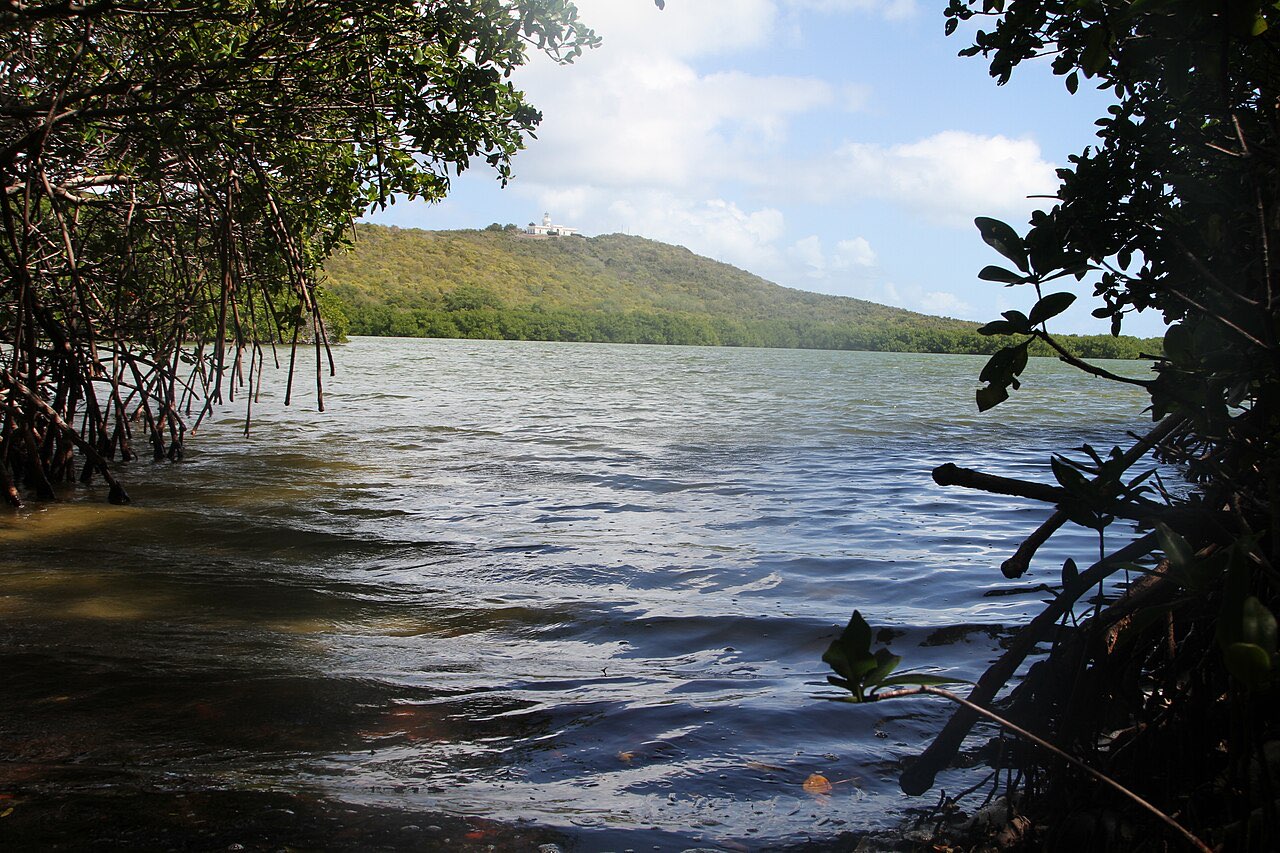
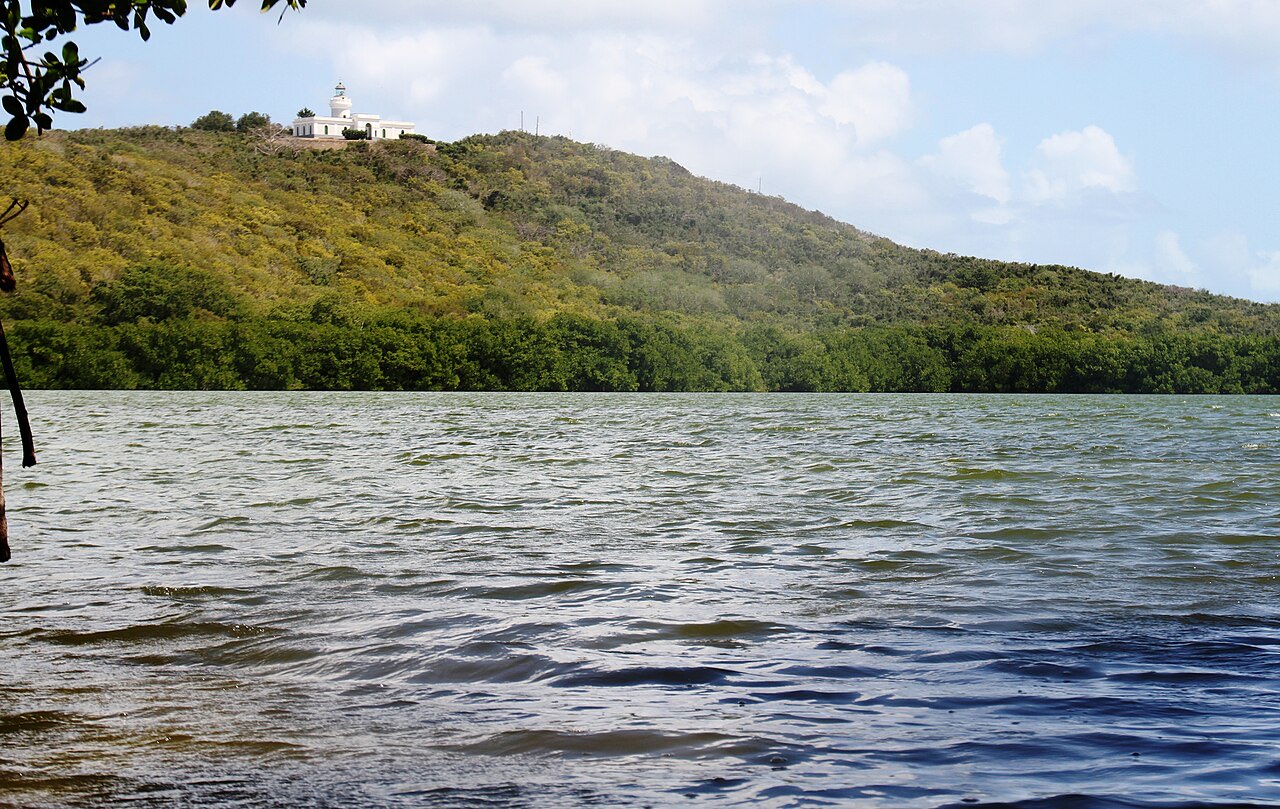
Laguna Grande sits inside the Las Cabezas de San Juan reserve, beneath the lighthouse on the island’s north-east tip. Discover Puerto Rico points out that it is technically a lagoon, not a bay, and that it is the closest of the three to San Juan. Tours paddle kayaks through a narrow, dark mangrove channel and out into the open lagoon, where the glow is strongest.
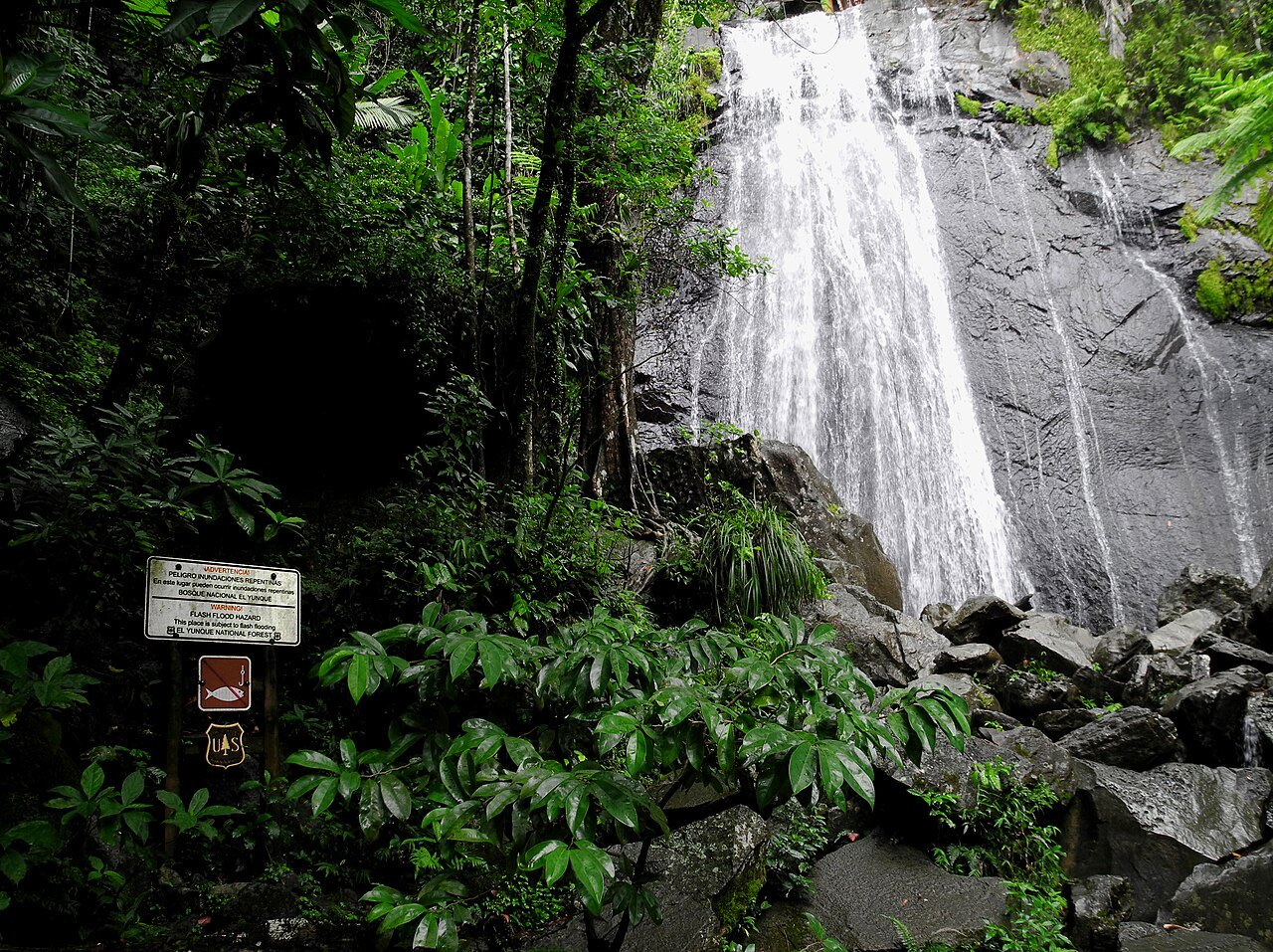
It is the easiest bio bay to fit into a trip, especially as an evening after a morning at El Yunque, which is on the same side of the island. The catch is the paddle: the channel is narrow and can get congested on popular nights, and kayaks are often doubles, so you may be paddling with a partner. If you are unsure about paddling, ask whether the operator offers a boat option.
La Parguera, Lajas
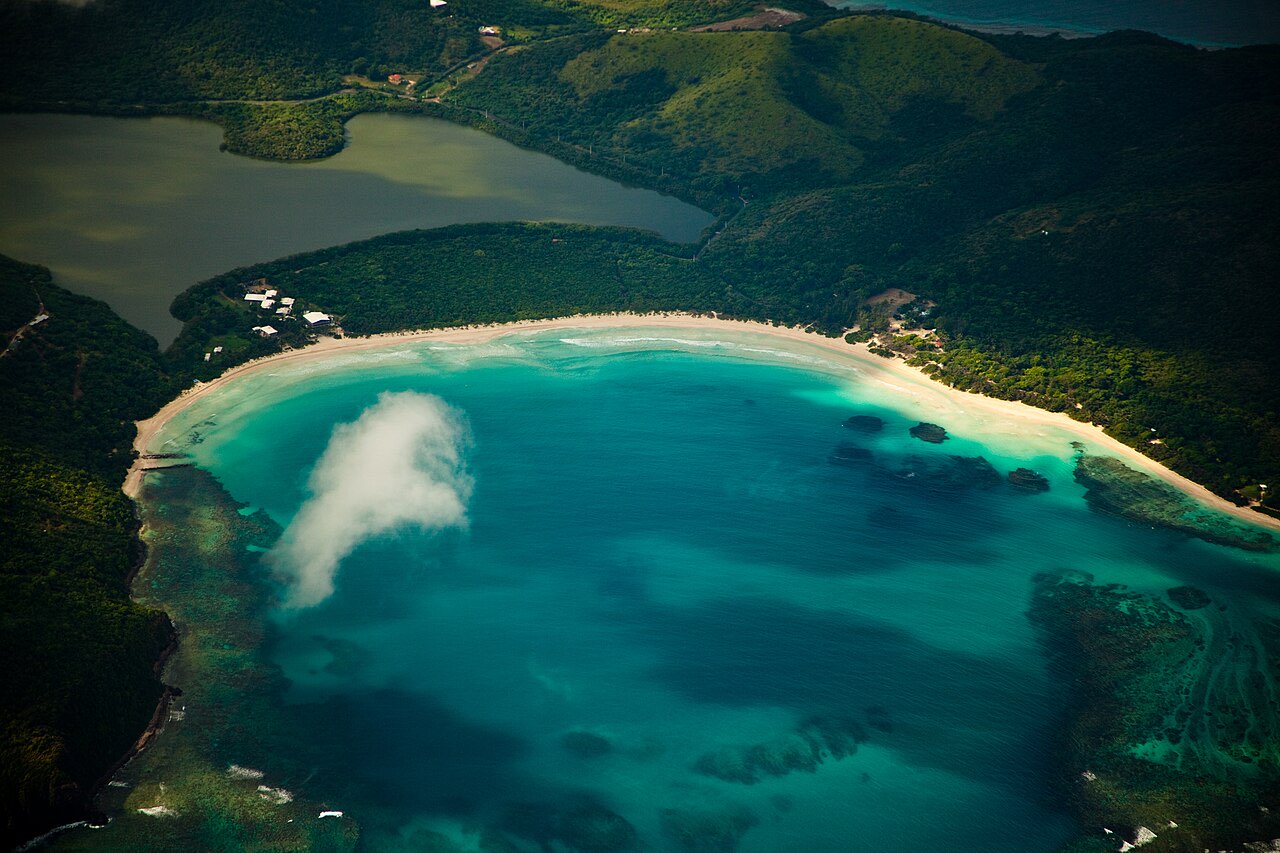
La Parguera is a small fishing and holiday village on the south-west coast, with mangrove cays offshore. Its bay is the least bright of the three on Para la Naturaleza’s numbers, but it is the only one where swimming is allowed, which Discover Puerto Rico says is possible on most nights, typically from a boat tour. It suits travellers already exploring the south-west, and anyone for whom floating in glowing water is the whole point.
Moon phase: the single biggest factor
Bioluminescence is faint. Moonlight drowns it out, and city lights do too. Discover Puerto Rico’s first piece of advice is to watch the moon and avoid the full moon: the darker, the better. The best nights are the few either side of the new moon, after the sun has fully set.
US Naval Observatory dates for the coming season:
| New moon (best) | Full moon (worst) |
|---|---|
| 9 November 2026 | 24 November 2026 |
| 9 December 2026 | 24 December 2026 |
| 7 January 2027 | 22 January 2027 |
Around the full moon, some operators may schedule tours for the dark window after sunset and before moonrise, or after moonset. That can work, but ask which one you are booking. If you only have one possible night, book it and go anyway; a dimmer glow is still memorable. If you have flexibility, plan the trip around the calendar. For broader timing, see the best time to visit Puerto Rico.
How to protect the bays (and why the rules exist)
The bays are fragile, and the official advice is short:
- No sunscreen, lotion, cream or insect repellent on anything that touches the water. Discover Puerto Rico asks visitors to avoid any product that could harm the organisms.
- No bright lights. Leave flash and torches off; ambient light dims what you see.
- Don’t litter, and stay on the routes your guide uses.
- Follow the operator’s no-swimming rule at Mosquito Bay and Laguna Grande.
- Ask about brightness before you go. Discover Puerto Rico suggests calling ahead to check that brightness has recently been above 30%.
Puerto Rico’s DRNA manages the bays with the Vieques Conservation and Historical Trust and Para la Naturaleza, which monitor water quality and the organisms themselves. Motorised access rules differ between bays and have changed over the years; licensed operators know the current rules, which is one more reason to book with one.
Choosing a tour
Use these questions to sort operators:
- Kayak or boat? Kayaks put your hands in the water and are the classic experience; boats suit families, older travellers and people who cannot paddle.
- Which night and what time? Check the moon, and whether the tour leaves after full dark.
- What happens if the glow is weak, or it storms? Ask about the rebooking and refund policy.
- Group size? Smaller groups mean less congestion in the mangrove channels.
- Transport? Some Fajardo tours include pickup from San Juan; ask, if you do not have a car.
Prices vary by bay, tour type and whether transport is included, and they change, so compare current rates on operators’ own sites. Discover Puerto Rico’s bio bay page lists operators at all three bays.
Photography: lower your expectations
Discover Puerto Rico advises leaving cameras and electronics behind. The glow is real but faint and moving, so phone cameras rarely capture it, and the bright images you see online are usually long exposures with professional equipment. Enjoy it with your eyes. A waterproof bag for your phone is worth having for the kayak anyway.
Planning around the rest of your trip
- Staying in San Juan: do Laguna Grande, ideally as the evening half of an El Yunque day. Our San Juan guide covers the base.
- Island-hopping: spend at least one night on Vieques for Mosquito Bay.
- Road-tripping the south and west: La Parguera fits on the way between Ponce and Rincón. Our Puerto Rico driving guide covers renting and roads.
- Doing the whole island: our Puerto Rico 7-day itinerary slots a bio bay in around the moon.
Mistakes to avoid
Booking a full-moon night without checking. It is the most common reason people are disappointed.
Wearing repellent or sunscreen into the water. It harms the organisms; cover up with clothes instead.
Planning Mosquito Bay as a day trip from San Juan. Tours run after dark; stay overnight on Vieques.
Expecting to swim in Mosquito Bay or Laguna Grande. Swimming is a La Parguera experience.
Expecting photos like the ones online. Those are long-exposure images.
Before you go
The comparisons above come from Discover Puerto Rico’s bio bay page, Para la Naturaleza’s overview of the three bays, the Vieques Conservation and Historical Trust, and the US Naval Observatory’s moon-phase data, read in October 2026. Check the Vieques Conservation and Historical Trust for news on Mosquito Bay, use the US Naval Observatory moon phase calculator to plan your night, and confirm current rules and conditions with your operator before you go.
Frequently asked questions
Which bioluminescent bay in Puerto Rico is the brightest?
Mosquito Bay on Vieques. Puerto Rico's tourism board calls it one of the brightest bioluminescent bays in the world, the conservation group Para la Naturaleza says Guinness World Records lists it as the brightest, and its density of glowing organisms has been measured at around 480,000 per litre, compared with about 30,000 per litre at La Parguera. The trade-off is that it is on an island, so it takes the most planning to reach.
Can you swim in Puerto Rico's bioluminescent bays?
Only at La Parguera, in Lajas on the south-west coast, which Discover Puerto Rico says allows swimmers on most nights, usually from a boat tour. At Mosquito Bay and Laguna Grande, tours are by kayak or boat and swimming is not part of the experience. Whichever bay you visit, do not wear sunscreen, lotion or insect repellent in the water: the tourism board asks visitors to avoid any product that could harm the organisms.
What is the best time to see a bioluminescent bay?
On a dark night close to the new moon, after sunset. Moonlight washes out the glow, so the tourism board advises avoiding the full moon. Upcoming new moons are on 9 November 2026, 9 December 2026 and 7 January 2027, and full moons on 24 November, 24 December and 22 January, according to the US Naval Observatory. Cloudy nights can help rather than hurt, as long as it is not storming.
Which bio bay is closest to San Juan?
Laguna Grande in Fajardo, on the north-east coast. Strictly speaking it is a lagoon rather than a bay, reached by kayak through a narrow mangrove channel inside the Las Cabezas de San Juan reserve. It pairs easily with a morning at El Yunque, which is on the same side of the island, making it the practical choice if you are staying in San Juan without a car for long.
Is the glow guaranteed on a bio bay tour?
No. Brightness varies with rain, wind, water conditions and the moon, and has dropped at times after storms; Mosquito Bay's mangroves were badly damaged by Hurricane Maria in 2017 and are being replanted. Discover Puerto Rico recommends calling ahead to check that a bay's brightness has been above 30% before you go, and a good operator will tell you honestly if a night is poor.
Book an activity
Booked through GetYourGuide. We earn a commission if you book, at no extra cost to you — it never changes which option we recommend. How we work
Keep planning
- El Yunque: Reservations, Trails and Waterfalls
El Yunque reservations are no longer required: free PR-191 entry 8am–5pm, the $8 El Portal fee, which trails are open or closed, and how to plan the day.
Updated Oct 2026 - Puerto Rico Travel Requirements for US and Foreign Visitors
Puerto Rico travel requirements for 2026: US citizens need REAL ID, not a passport. Foreign visitors need ESTA or a visa. Rules for minors and USDA customs.
Updated Nov 2026 - Best Time to Visit Puerto Rico: Season, Prices and Storms
The best time to visit Puerto Rico, with the official hurricane-season dates and peak, the dry months, which shoulder weeks are genuinely good value, and SanSe.
Updated Oct 2026